Just a short drive from Tarnów, the village of Zalipie offers one of the most distinctive glimpses into Poland's living folk-art traditions.
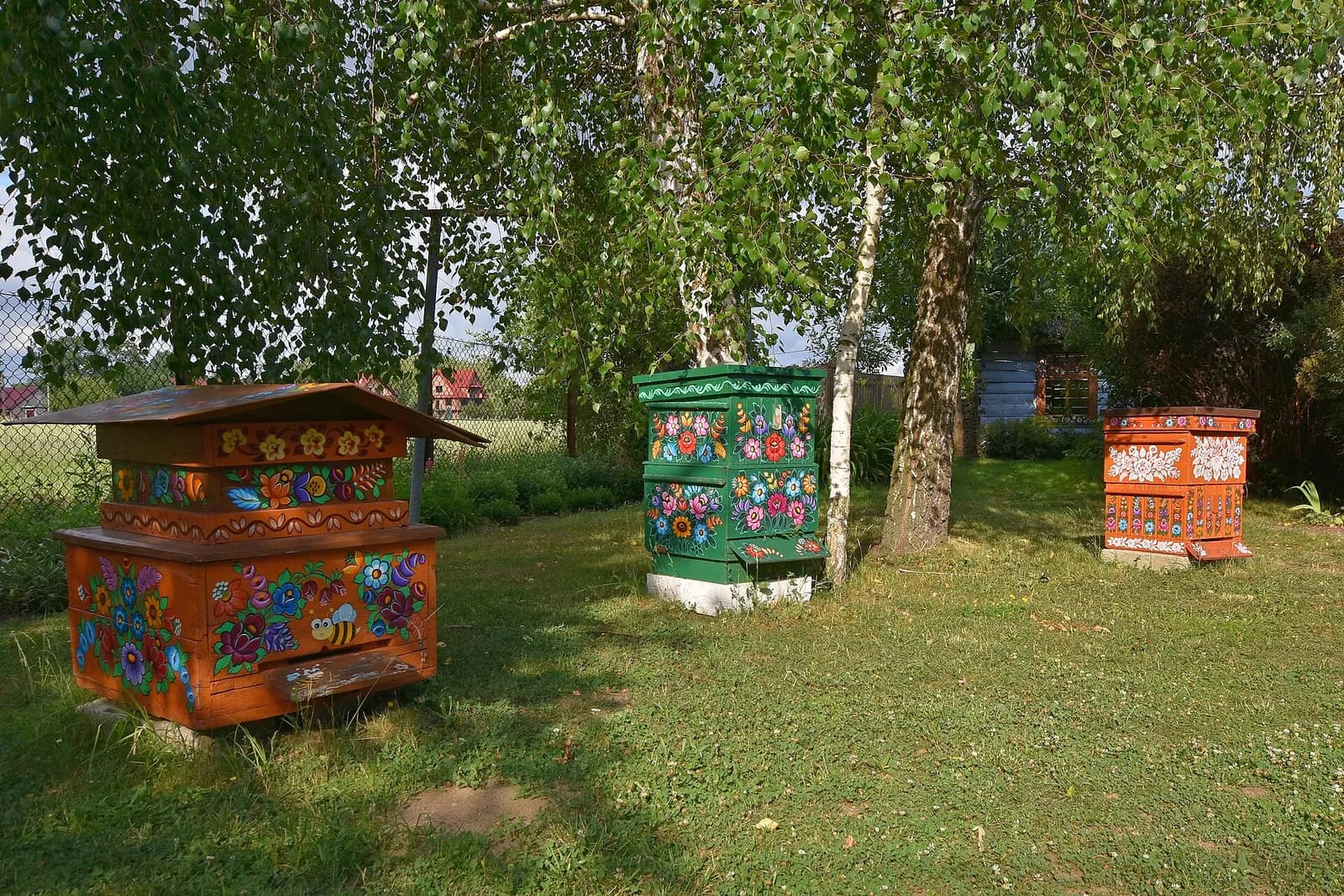
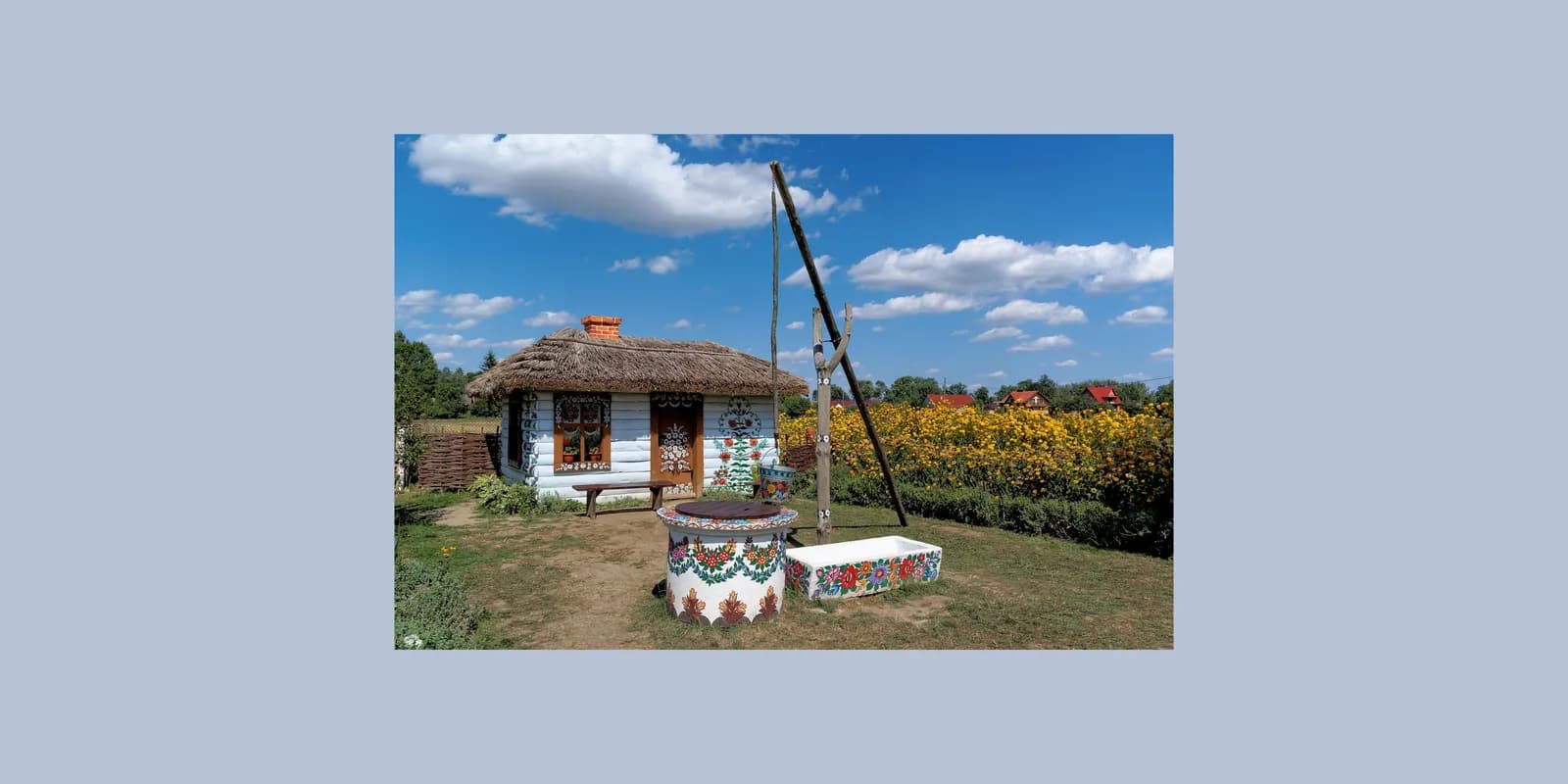
Flowers appear on cottage walls, barns, fences, wells and household objects. Brightly painted interiors continue the same decorative language, while paper flowers and other handmade ornaments add colour to the homes.
It is easy to see why Zalipie has become a popular destination in Małopolska. But the real story is not the colourful photographs. It is the fact that people here are still painting.
The tradition has been passed from generation to generation and remains part of everyday life in Zalipie and the surrounding villages of Powiśle Dąbrowskie.
How Zalipie's painted houses began
The origins of the tradition are practical.
In the days when rural cottages were heated by open fires without chimneys, smoke could leave the walls blackened. Women regularly whitewashed the interiors with lime to freshen them up. Simple marks used to cover the soot gradually became more decorative.
By the end of the 19th century, floral patterns had become increasingly elaborate. The paintings eventually moved beyond interior walls to the outside of houses and farm buildings, as well as fences, wells and other parts of the homestead.
What began as a way of keeping a home clean and attractive developed into a distinctive regional art form.
Felicja Curyłowa and Zalipie's best-known home
The story of Zalipie is closely connected with Felicja Curyłowa, one of the area's best-known folk artists.
Born in 1903, Curyłowa painted walls, furniture, ceramics, paper decorations and other everyday objects. Her work helped bring wider attention to the artistic traditions of Zalipie and Powiśle Dąbrowskie.
Her former home is now preserved as the Zagroda Felicji Curyłowej, part of the Muzeum Ziemi Tarnowskiej.
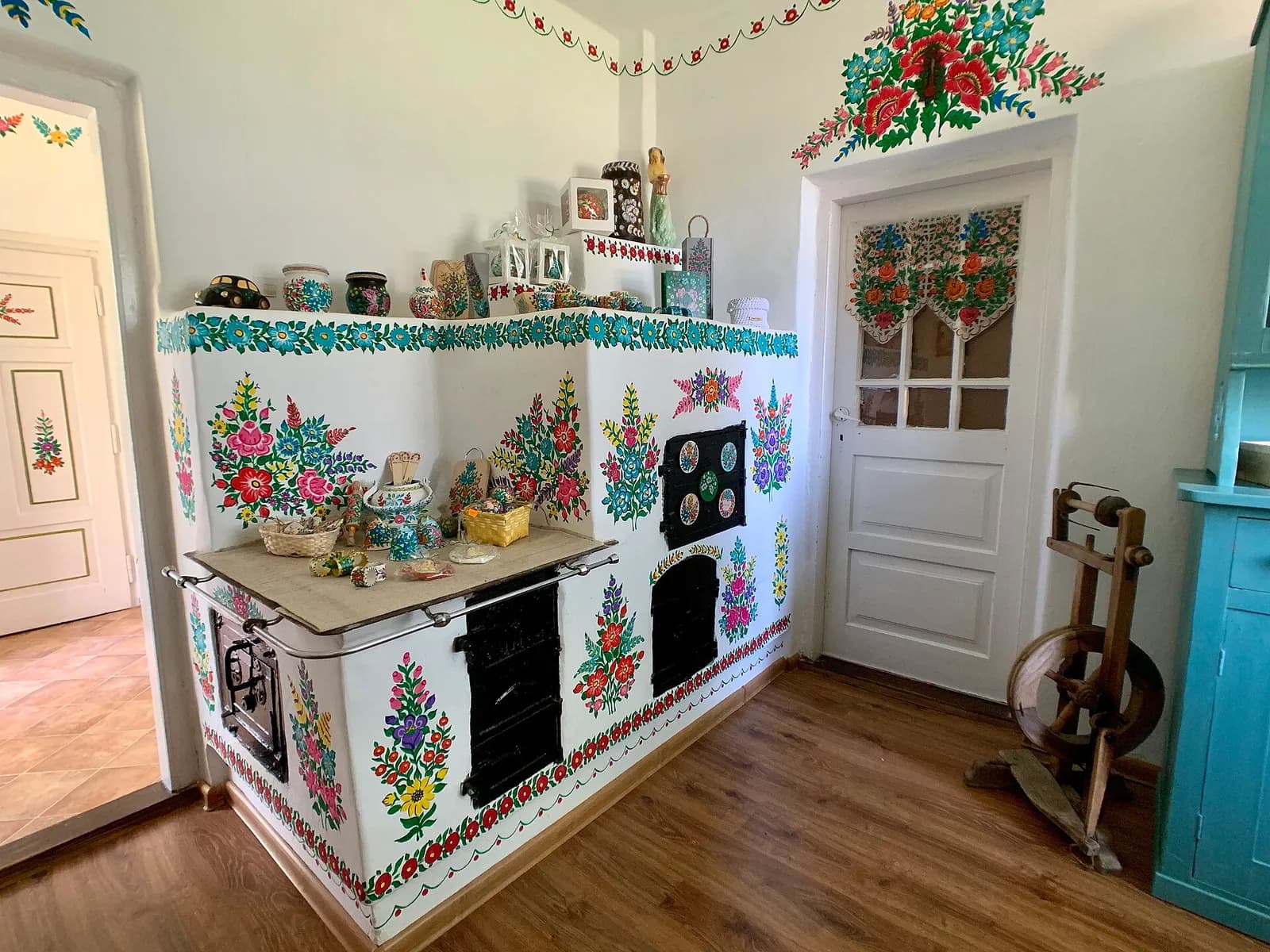
The homestead gives visitors the chance to see the art in its original domestic context. Walls and ceilings are decorated with floral designs, while traditional objects and paper decorations fill the rooms.
One of the most memorable details is the blue kitchen stove, covered with brightly coloured flowers.
The homestead also includes another historic cottage associated with painter Stefania Łączyńska.
Visiting Curyłowa's home helps explain an important part of Zalipie's appeal. These paintings were never simply architectural decoration. They were woven into domestic life.
Zalipie is still a working village
Perhaps the biggest mistake a visitor can make is to think of Zalipie as an open-air museum.
It isn't.
Many of the decorated buildings are private homes. The village is still a residential community, and visitors should take care to respectfully admire the houses rather than treating every painted cottage as an attraction to enter.
That is precisely what makes exploring Zalipie so interesting.
A floral-painted house, fence or well can appear alongside ordinary modern buildings. The decorations are not frozen in a particular historical period. They belong to a community that has continued to use and adapt the tradition.
The village school, kindergarten, fire station and parish church also feature painted decoration, showing how deeply the style has become part of local identity.
Dom Malarek keeps the flowers coming
For a closer look at the contemporary tradition, Dom Malarek, or the House of Painters, is an important stop.
The cultural centre supports artists from Zalipie and the surrounding area, helping to preserve and promote the region's folk-art traditions. Visitors can learn about the techniques used by local artists and see or purchase decorated objects.
It is a useful reminder that Zalipie's story is not only about the past. Here, art is still a part of everyday life.
Malowana Chata brings generations together
The annual Malowana Chata, or Painted Cottage, competition is perhaps the clearest demonstration that the tradition remains active.
First held in 1948, the competition has become one of Poland's longest-running events dedicated to traditional folk art. Since the 1970s it has been organised by the Muzeum Ziemi Tarnowskiej.
The 2026 edition was the 63rd competition. It attracted 105 participants, including 20 children and young people, from 13 villages in Powiśle Dąbrowskie.
The entries included private houses and farmsteads, but also schools, kindergartens and a community centre.
The participation of younger artists is particularly significant. Zalipie's floral designs are not simply something being preserved behind museum glass. Children are learning the techniques and adding their own work to a tradition that continues to develop.
The tradition stretches beyond Zalipie
Although Zalipie is now the best-known painted village in Poland, the tradition is not exclusive to it.
Similar decorative practices developed in other villages across Powiśle Dąbrowskie, including Niwki, Podlipie and Samocice.
Zalipie's reputation grew through the work of artists such as Curyłowa, the attention of ethnographers and cultural institutions, and the long-running Malowana Chata competition.
That wider context makes a visit even more rewarding. Zalipie is the most recognisable part of a regional tradition rather than an isolated curiosity.
A colourful day trip from Tarnów
Zalipie is close enough to Tarnów to make an easy day trip, and the best way to experience it is at a leisurely pace.
Start at the Felicja Curyłowa Homestead, then explore the village on foot, looking for painted houses and smaller details along the way. A painted well or floral border around a doorway can be just as interesting as one of the larger cottages.
The museum currently lists standard admission at 12 zł, with reduced, family and social tickets also available. Opening hours vary seasonally, so it is worth checking the Muzeum Ziemi Tarnowskiej's website before setting off.
The village itself does not require an entrance ticket. It is simply a place to walk, observe and appreciate, while remembering that many of the buildings belong to local families.
See more: Poland’s Oldest Diocesan Museum in Tarnów
Sources: Muzeum Ziemi Tarnowskiej, Visit Tarnów and Visit Małopolska.
Image credit: Jakub Hałun, Wikimedia Commons, CC BY-SA 4.0 / Henryk Bielamowicz, Wikimedia Commons, CC BY-SA 4.0 / Kgbo, Wikimedia Commons, CC BY-SA 4.0