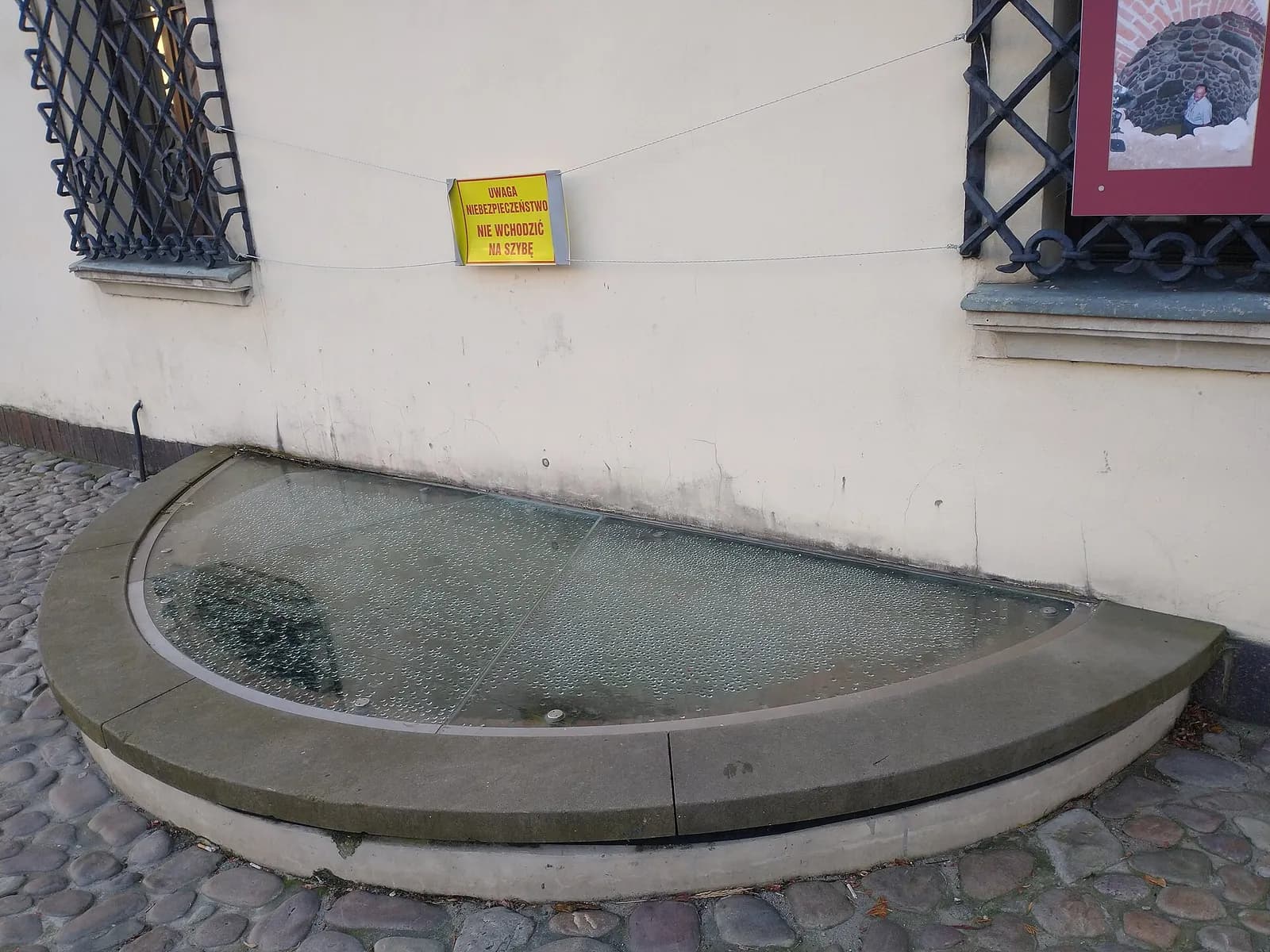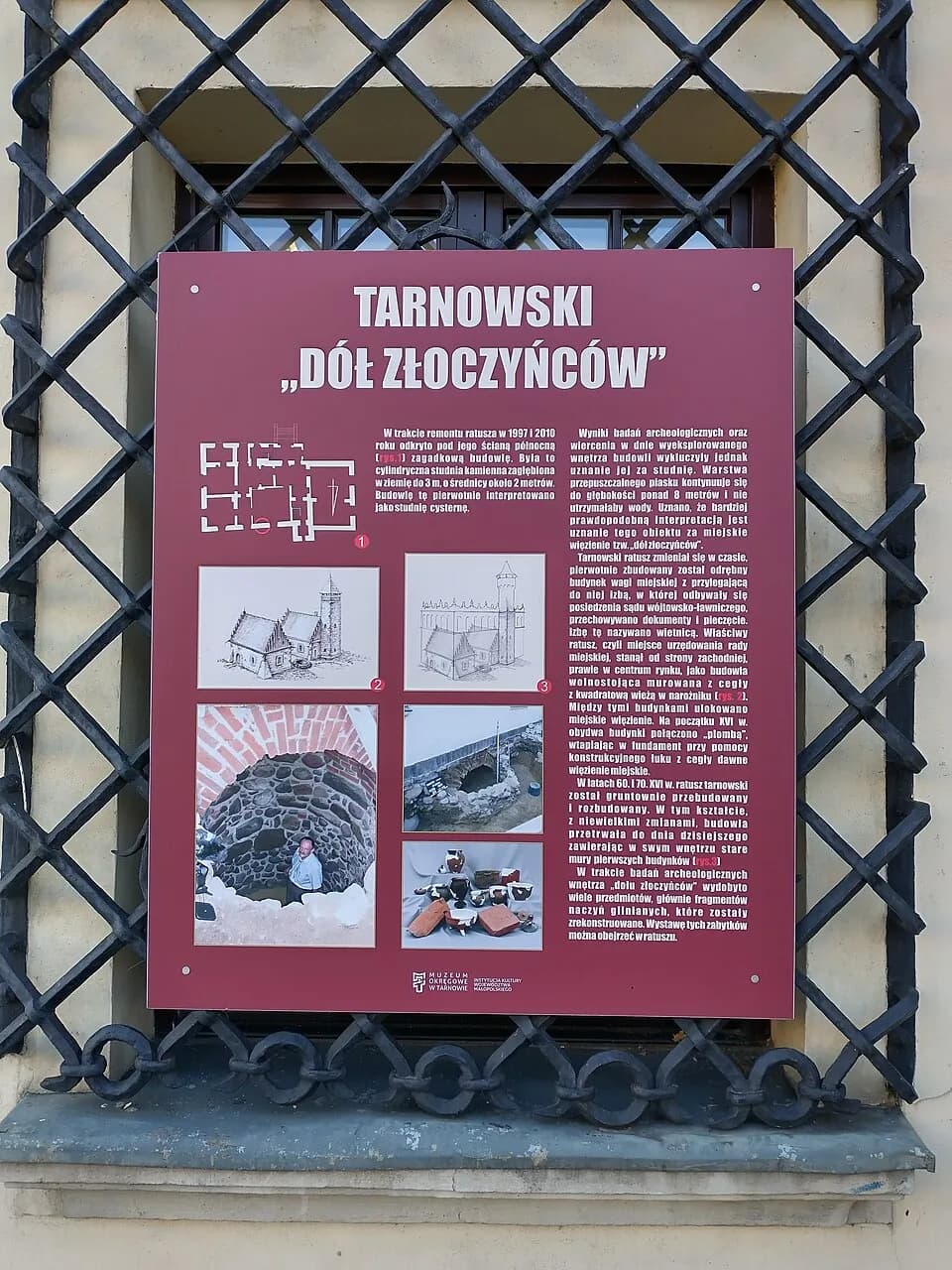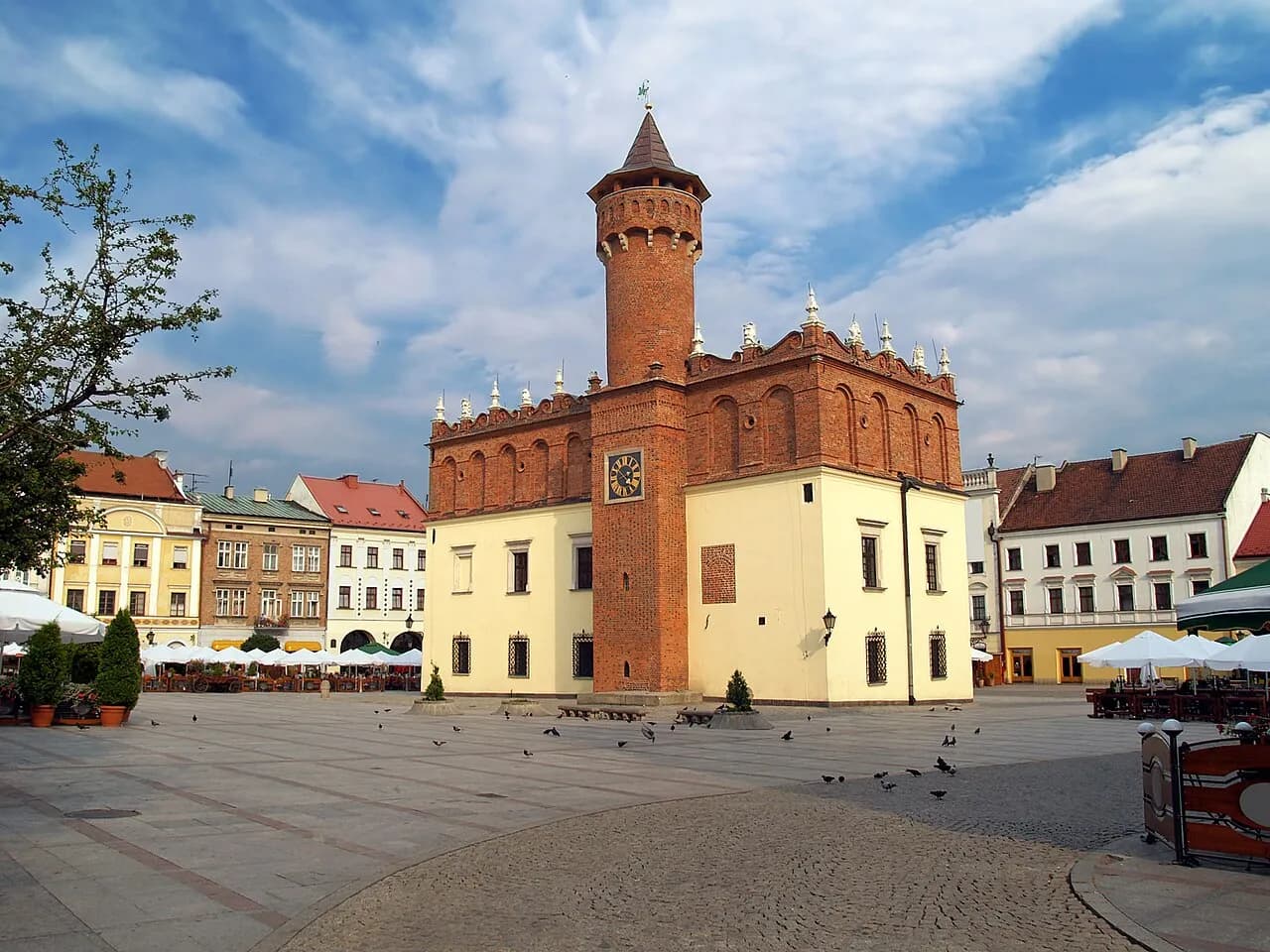
Every town has its hidden stories, but few are quite as intriguing as the Dół Złoczyńców (The Criminals’ Pit) beneath Tarnów’s Market Square. Discovered during restoration work on the Renaissance Town Hall, this stone-lined chamber has transformed our understanding of the town’s medieval past and offers visitors a fascinating insight into the administration of justice centuries ago.
Although it was initially believed to be an old well, archaeological research revealed a very different story. Today, the structure is widely regarded as the remains of Tarnów’s medieval prison, where offenders were once held beneath the heart of the town.
An Unexpected Discovery Beneath the Town Hall
The Dół Złoczyńców was uncovered in 1997 during conservation work on Tarnów’s Town Hall, with further archaeological investigations taking place in 2010.
At first glance, the circular stone structure appeared to be a medieval cistern. Measuring approximately two metres in diameter and three metres deep, its carefully constructed stone walls resembled those of a traditional well.
However, geological investigations soon challenged that assumption. Archaeologists discovered more than eight metres of highly permeable sand beneath the structure, making it impossible for water to be retained for any significant length of time. This finding effectively ruled out the theory that the chamber had been built to store water.
Instead, researchers concluded that the structure was most likely the town’s medieval Dół Złoczyńców, literally translated as the "Criminals’ Pit".
Justice in Medieval Tarnów
In medieval towns, prisons often looked very different from those we imagine today. Rather than enclosed cells, some offenders were confined in deep stone-lined pits, accessed from above and sealed with a heavy wooden cover or iron grate. Escape was virtually impossible.
The location of Tarnów’s pit strongly supports this interpretation. It sits immediately beside the medieval Town Hall, where the municipal authorities governed the town, and close to the former court building where legal matters were heard.
Although no surviving medieval document explicitly identifies the structure as the town prison, archaeologists consider this explanation the most convincing based on its construction, location and the evidence uncovered during excavation.
Revealing the Layout of Medieval Tarnów
The discovery also shed new light on how Tarnów’s civic centre developed over the centuries.
Before the impressive Renaissance Town Hall took its present form, the Market Square contained several separate municipal buildings, including:
- the town weigh house,
- the wietnica, where the municipal court met and important records were stored,
- the original town hall,
- and the prison situated alongside them.
During rebuilding in the early sixteenth century, these structures were combined into the larger Town Hall that dominates the square today. Rather than demolishing the prison, builders incorporated it into the new foundations by constructing a supporting brick arch above it.
Objects Left Behind
Excavations inside the chamber uncovered fragments of medieval pottery and other everyday objects, helping archaeologists date the structure and better understand daily life in Tarnów during the Middle Ages.
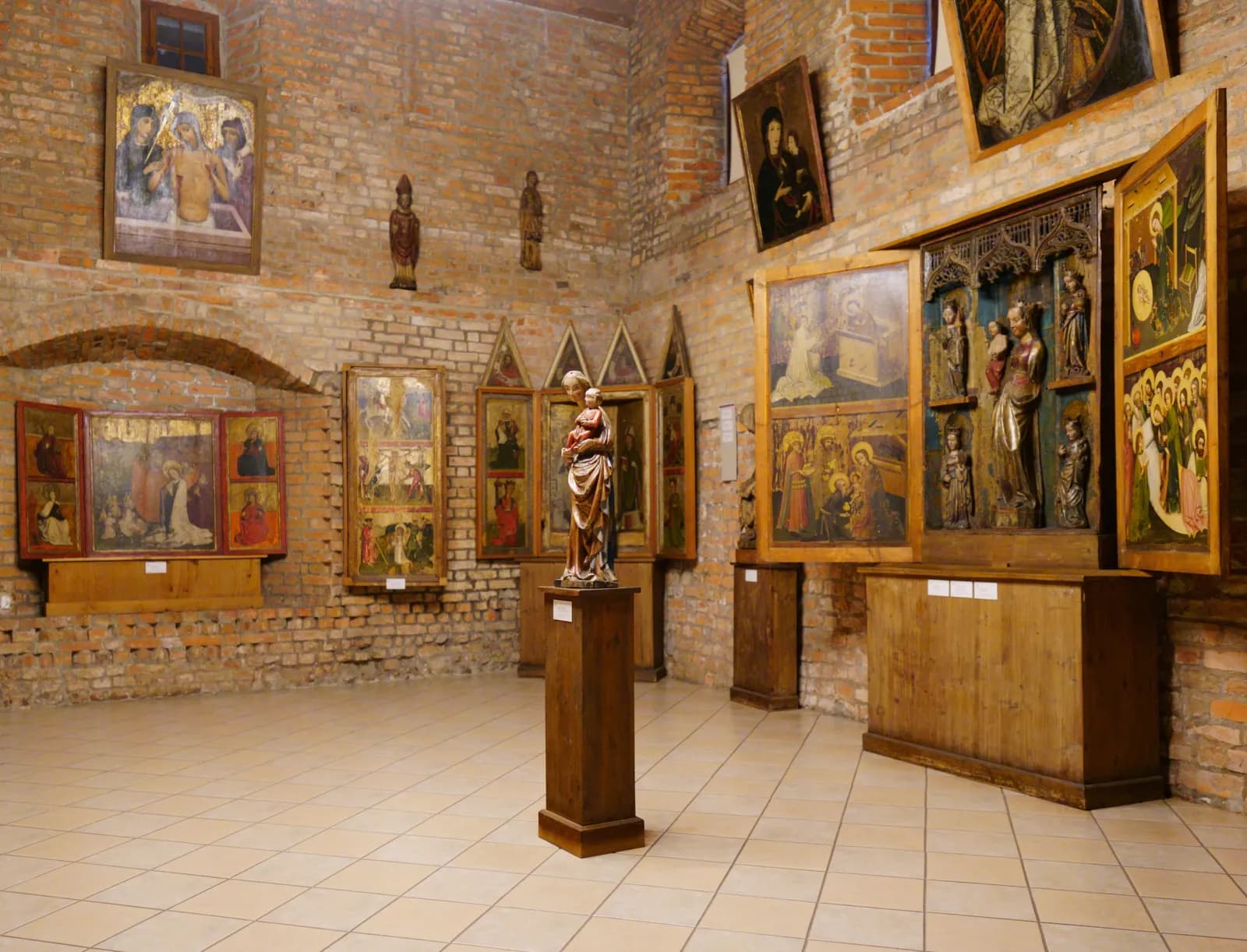
Many of the reconstructed ceramic vessels recovered from the site have since become part of the museum collection housed within the Town Hall, allowing visitors to connect these archaeological discoveries with the town’s wider history.
A Hidden Chapter of Tarnów’s Heritage
The Dół Złoczyńców is one of Tarnów’s lesser-known historical attractions, yet it provides rare physical evidence of how justice was administered in a medieval Polish town.
It also demonstrates the importance of archaeological research. What first appeared to be a simple well proved to be something far more significant, revealing forgotten aspects of Tarnów’s civic life and reshaping historians’ understanding of the Market Square’s development.
For visitors exploring Tarnów today, the preserved remains beside the Town Hall offer a reminder that some of the town’s most compelling stories lie just beneath the surface.
image credit: Ffolas, CC BY-SA 3.0 pl / MOs810, CC BY 4.0